Our first product was almost aggressively narrow.
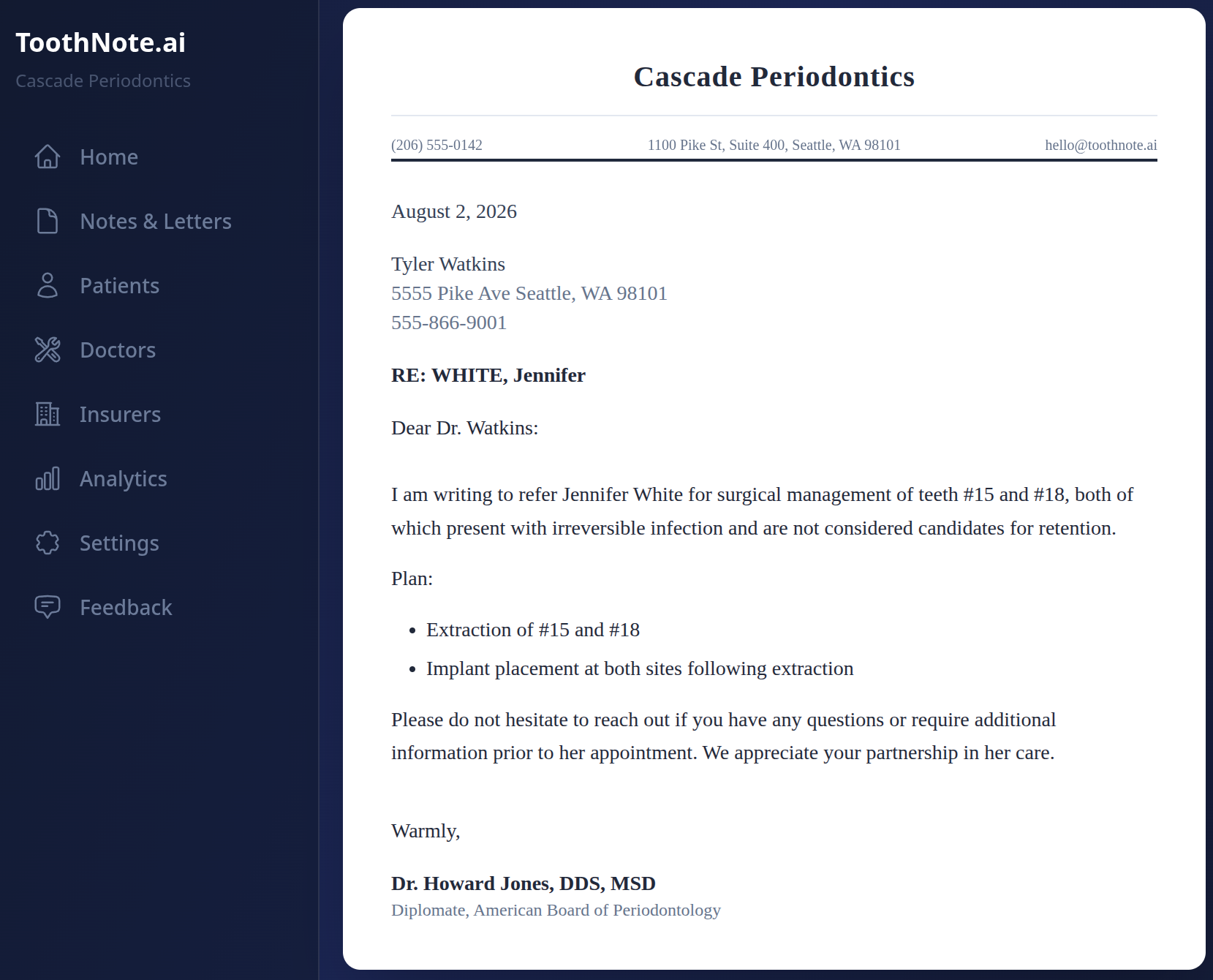
The doctor finished an exam, recorded a short memo, and ToothNote.ai turned it into a polished letter back to the referring doctor. The job had a clear beginning, a clear recipient, and a clear definition of done. It was a good place to start because we could tell immediately whether the product had helped.
When it worked, the letter felt easy. It also made the remaining waste impossible to ignore.
The doctor had already worked through the case with the patient. Then, after the encounter, the doctor had to reconstruct the important parts for the memo. We had reduced the writing, but we had not eliminated the second telling.
That is why we expanded to chairside exam recordings.
The memo taught us what finished looks like
Starting with the referral letter gave us useful constraints. The recipient had to be correct. The patient, findings, treatment decision, and next step had to be clear. The practice letterhead and clinician sign-off had to look professional. Most importantly, the doctor had to review the finished letter before it went anywhere.
Those constraints still shape ToothNote.ai. The product does not treat a transcript as the final work. It uses the captured encounter and supporting evidence to prepare artifacts for the clinician to review, edit, and approve.
But a short memo can only contain what the doctor remembers to restate. The real encounter contains more: the patient's concern, the clinical reasoning, the treatment conversation, the questions that changed the explanation, and the small details that become important when the note is finished.
We could make the memo faster. Or we could stop asking the doctor to rebuild the encounter after it was over.
Move the capture point closer to the work
Chairside recording changes the starting material. Instead of finishing the exam and then summarizing it from memory, the clinician deliberately starts an exam recording while the visit is happening.
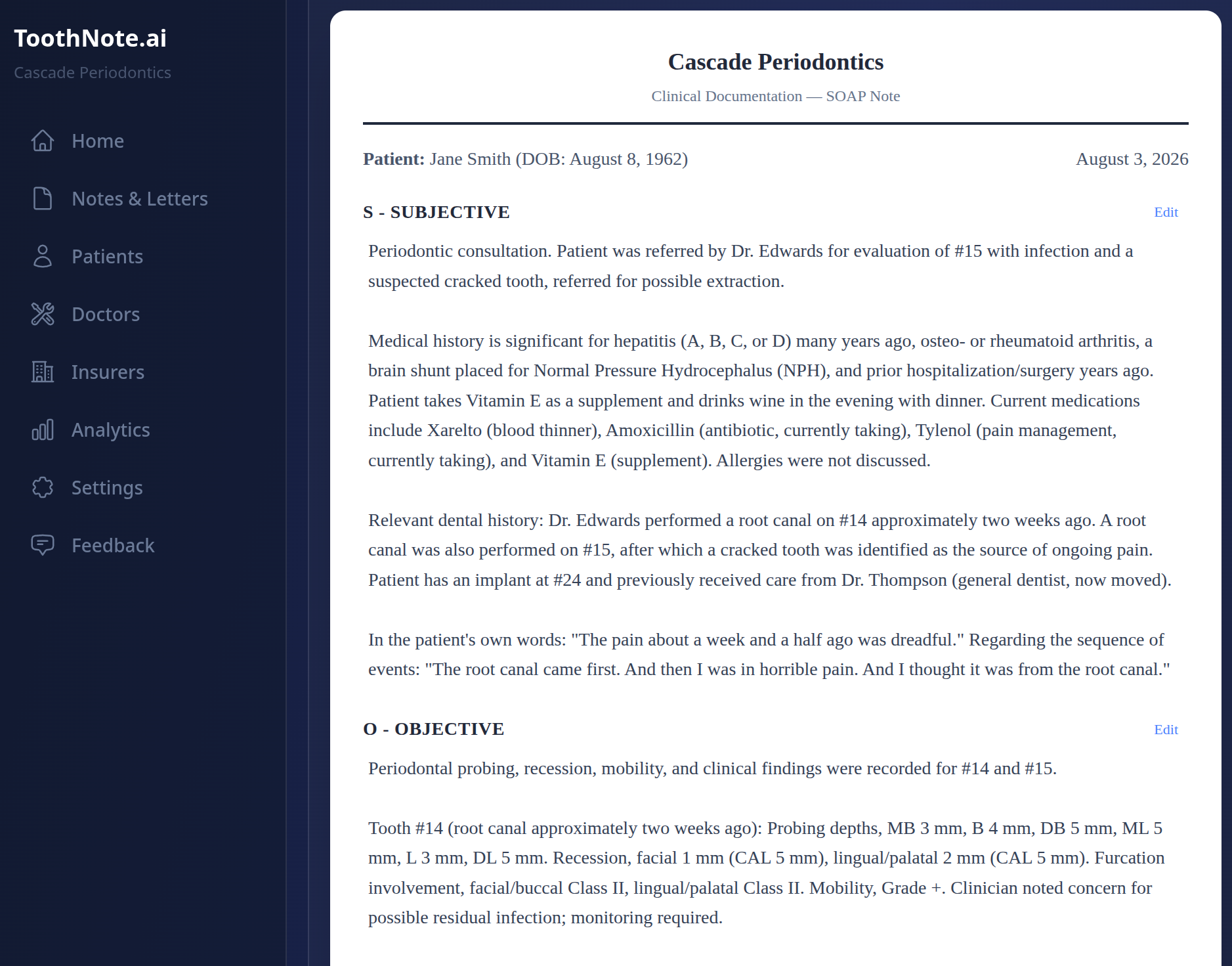
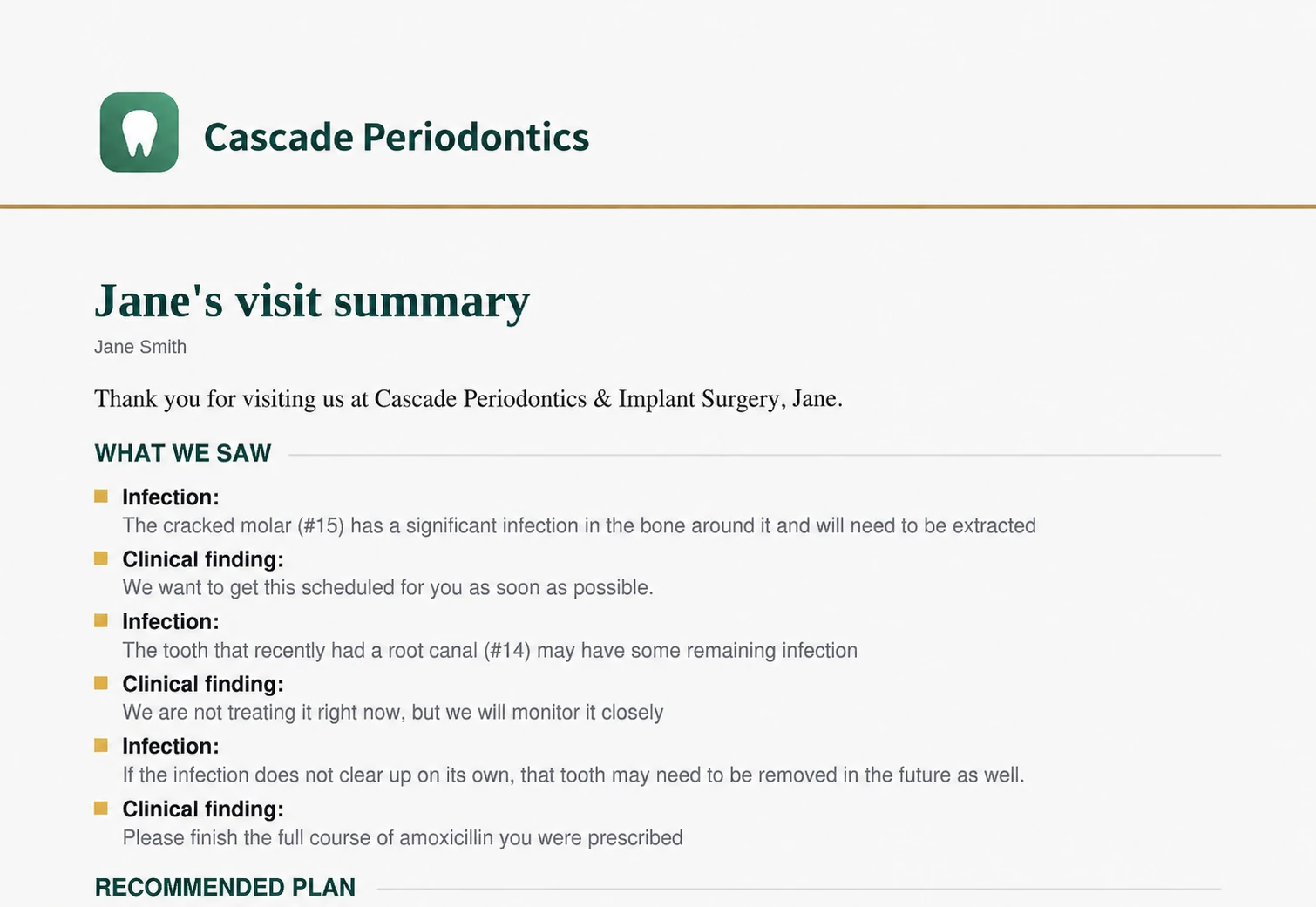
ToothNote.ai can then use that encounter to draft the clinical note. When a referring doctor is attached to the case, the same reviewed facts can also support the letter back. The patient recap and other case work can begin from the same encounter instead of another round of reconstruction.
This is not an always-listening product. The recording is a deliberate action. The clinician decides when to start it, when to stop it, what supporting evidence belongs with the case, and what each finished artifact should say.
Capture once, branch later
The important product change was not simply accepting longer audio. It was recognizing the encounter as the shared source for several jobs.
A specialist exam may create a clinical note for the practice, a letter for the referring doctor, a plain-language recap for the patient, and a next action for the team. Those outputs are different. They have different audiences, different formats, and different standards for what belongs in them. But the practice should not have to recreate the same case separately for each one.
That is the idea behind the connected ToothNote.ai workflow: capture the case once, keep the reviewed facts attached to it, and let the right facts move into the right artifact.
Connection does not mean making every document identical. It means they no longer have to be rebuilt from scratch.
What we learned from moving chairside
The referral memo remains useful. There will always be status updates, follow-ups, and letter-only moments when a short dictation is the fastest path.
Chairside exam recording solved a different problem. It removed the assumption that documentation has to begin after the clinical work ends.
We started with a faster path to one letter. We grew into a capture surface for the case itself, because the best way to finish several pieces of work is often to stop recreating their shared source.
The referral letter was the first complete job. The recorded exam showed us how the rest of the case could stay connected.