Six first-class workflows
The specialist visit creates more than one document.
ToothNote.ai keeps six daily clinical and communication jobs explicit on one patient-centered workflow, instead of hiding them inside generic note templates.
Patient Exam
Record the specialist encounter and review a structured SOAP note built from the conversation and supported case context.
Encounter → SOAP note
Treatment Note
Capture a completed procedure in a specialty-shaped treatment note, with the patient, tooth, materials, findings, and follow-up kept together.
Procedure → treatment documentation
Referral Letter
Write back to the doctor who sent the patient in, using a short memo or the reviewed encounter already attached to the case.
Specialist → referring doctor
Insurance Appeal
Turn a denial, claim context, reviewed findings, and supporting evidence into a case-specific appeal draft for clinician review.
Denied claim → reviewed appeal
Medical Clearance
Prepare a request to the patient's physician for clearance around planned dental treatment and keep its follow-up with the patient.
Dental office → physician
Outbound Referral
Send a patient to another office with the receiving clinician, reason, teeth or area, and branded referral context kept explicit.
Specialist → receiving office
Finished output examples
The workflow ends in a document someone can actually use.
ToothNote.ai composes the reviewed work into practice-formatted artifacts for the patient, referring doctor, physician, or receiving office. The output is the product, not a block of text the team still has to rebuild.
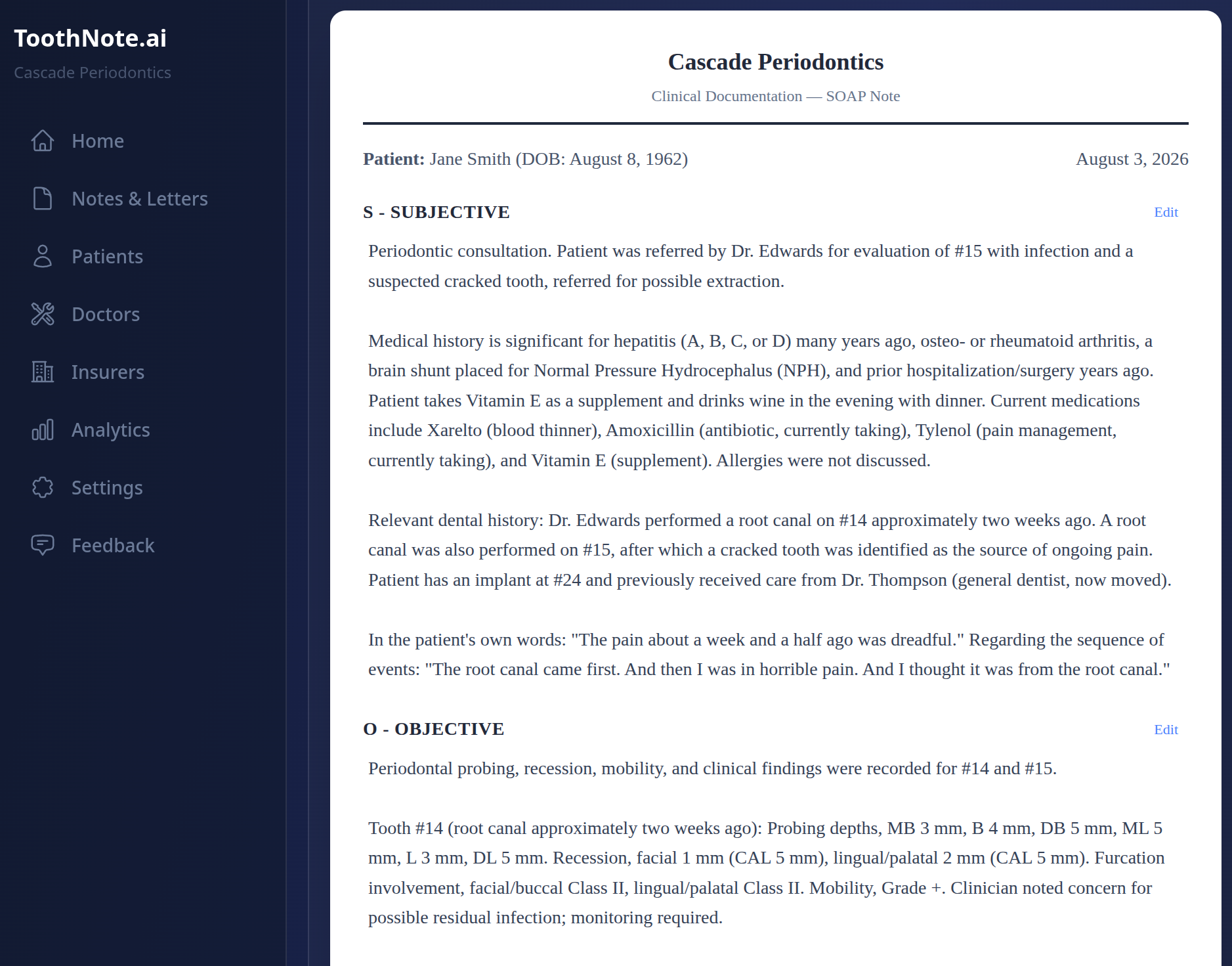
Clinical note
Practice-formatted SOAP documentation ready for the official chart workflow.
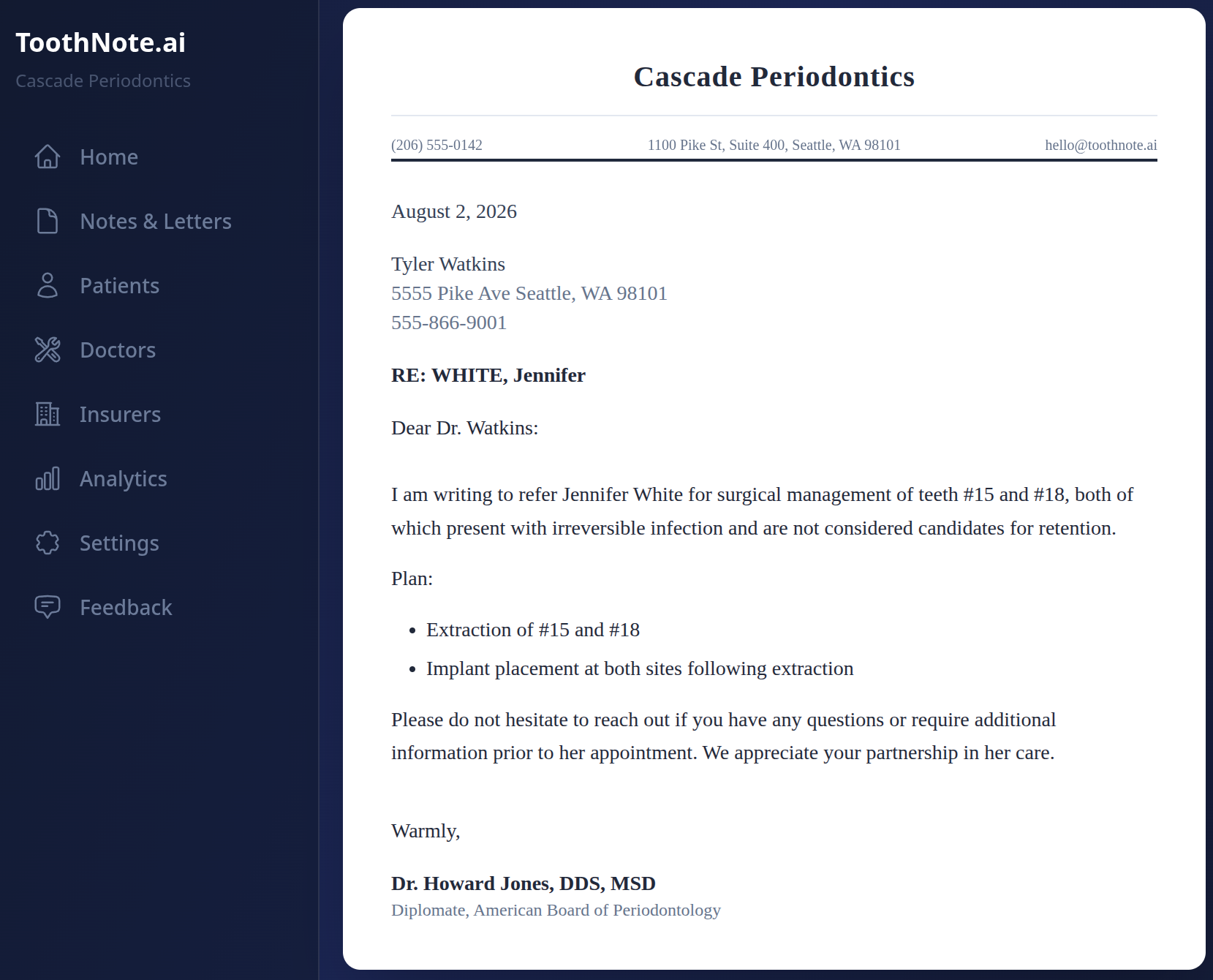
Referral letter
A complete return-to-referrer letter with clinical framing and clinician sign-off.
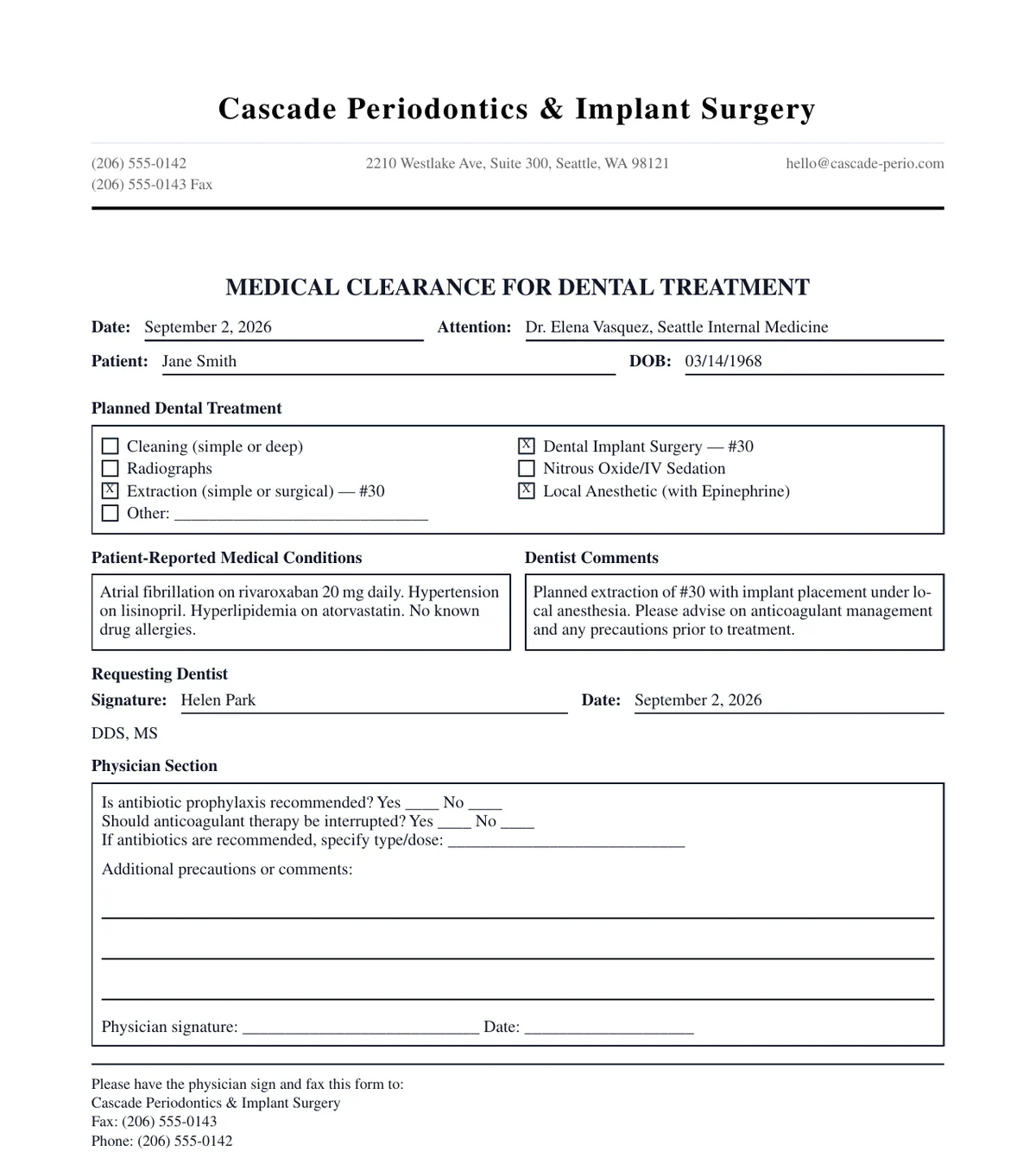
Medical clearance
A structured request that carries the planned treatment and relevant conditions.
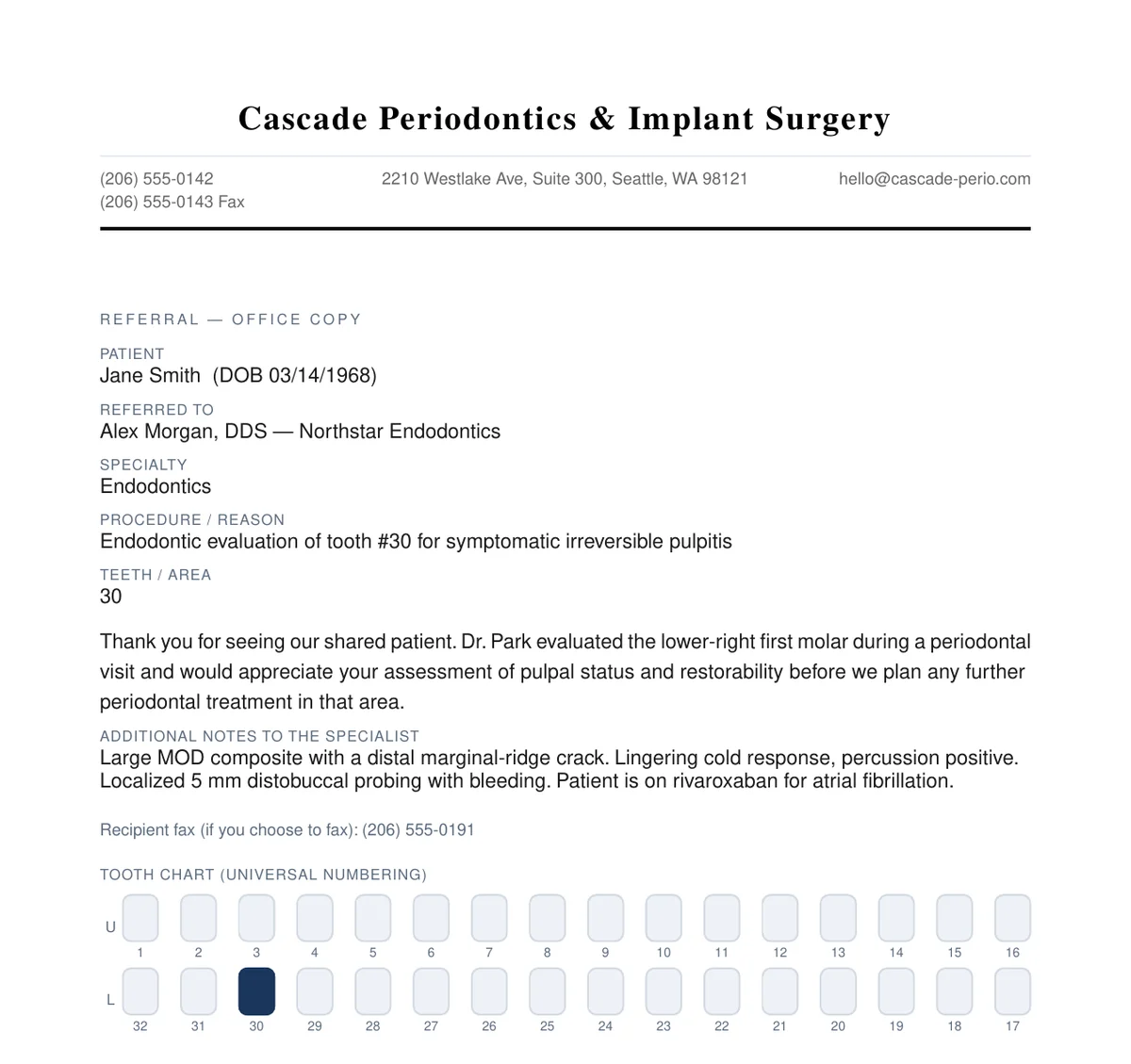
Outbound referral
A branded handoff with the recipient, reason, and treatment area kept explicit.
Examples use de-identified sample data. Every clinical artifact remains subject to clinician review before use or delivery.
Direction matters
A Referral Letter and an Outbound Referral are opposite jobs.
A Referral Letter writes back to the doctor who sent the patient in. An Outbound Referral sends the patient to another office. ToothNote.ai keeps the recipient, purpose, and patient relationship clear in each workflow.
One patient spine
Approved context should become more useful, not disappear.
Each reviewed encounter, finding, document, and relationship stays connected to the patient, so the next workflow can begin with the relevant case context already present.