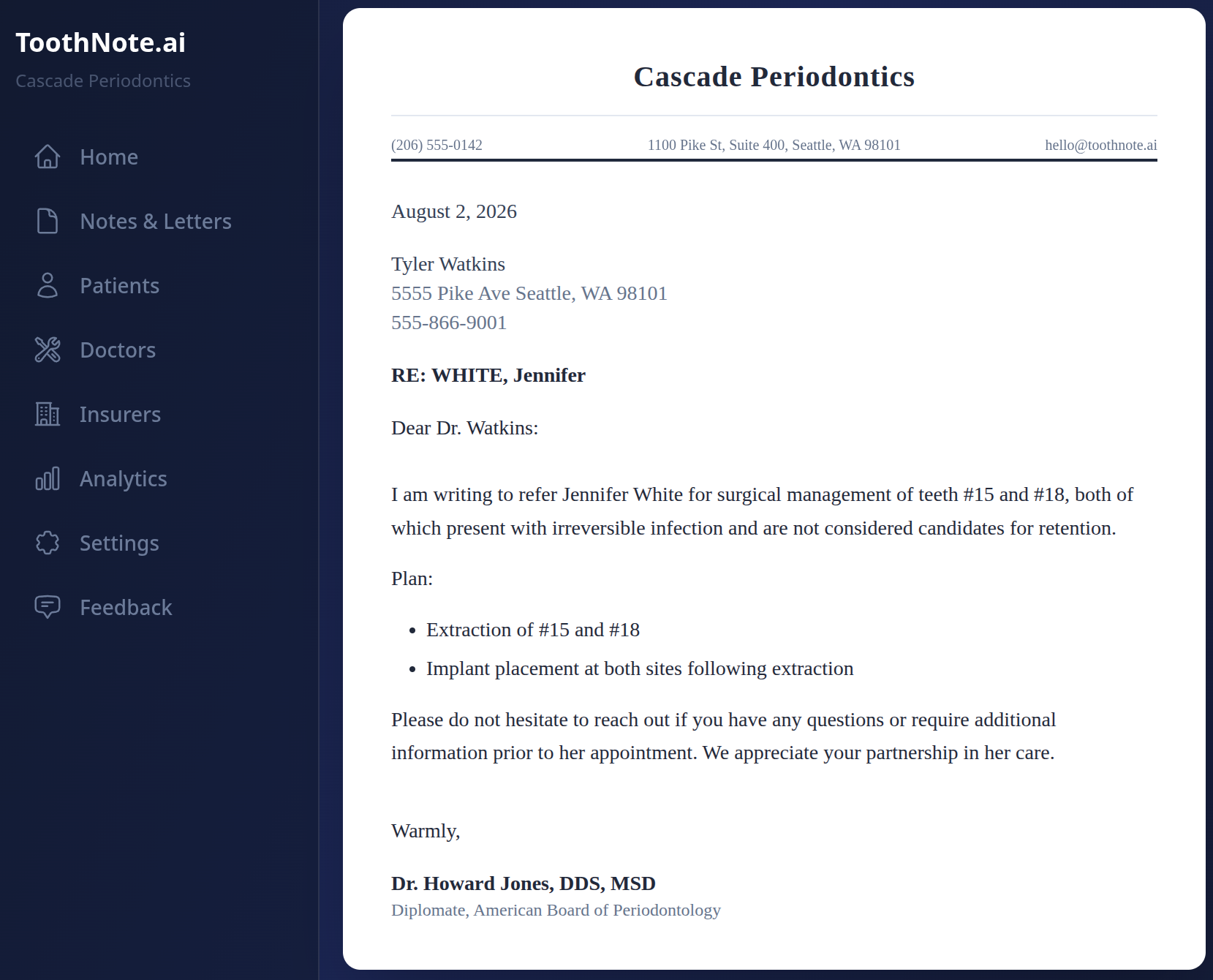
A specialist exam creates more than a note. It creates a patient explanation, a treatment decision, a relationship obligation, and a message that needs to travel back to the referring doctor.
We started with the referral letter because it makes that obligation visible. The letter is not optional polish around the visit. It is how the specialist returns the case to the professional relationship that brought the patient through the door.
The smallest complete workflow
A short voice memo can contain enough context to draft a useful letter. A recorded exam can add more detail and supporting evidence. Either path still ends with the same responsibility: the clinician reviews the document, makes it their own, and decides when it is ready to send.
The referral letter was our first wedge because it is a complete job with a clear human owner, a clear recipient, and a clear definition of done.
One encounter, several jobs
Once the case is captured, the same reviewed facts can support more than the letter. They can shape the clinical note, the patient recap, and the next action without requiring the practice to rebuild the encounter from memory each time.
That is the larger ToothNote.ai idea. We are not trying to turn a recorder into a pile of disconnected documents. We are building a connected specialist case workflow in which the right information can move into the right artifact while the practice management system remains the official record.
Review is part of the product
Clinical AI should not erase the clinician from the work. ToothNote.ai drafts for review. The clinician edits and approves every clinical artifact as their own work before it is used or delivered.
That boundary matters in the referral letter, and it matters everywhere else the case goes. It is why our workflow ends with review and send, not with autonomous publication.
Where we go from here
The referral letter remains the simplest way to experience ToothNote.ai. The product now connects it to clinical documentation, patient communication, charts, specialty measurements, and evidence handling. The wedge stayed small. The case around it grew.